
What Does “Responsibly Sourced” Actually Mean? A Guide to Sustainable Seafood
Key Takeaways:
• “Responsibly sourced” isnt just a feel-good phrase. It refers to specific practices around where, how, and under what standards seafood is caught or farmed.
• Wild-caught and farm-raised aren’t automatically “better” or “worse” than one another. What matters is how each is managed.
• Sushi-grade isn’t an official regulatory label. Understanding what actually makes raw fish safe to eat helps you order with more confidence.
• Poké House uses wild-caught and farm-raised seafood is rated Best Choice or Good Alternative by the Monterey Bay Aquarium Seafood Watch® program or Eco-Certified by a third party.
“Responsibly sourced.” “Sustainable seafood.” “Wild-caught.” These phrases show up on menus everywhere, but they rarely come with an explanation. For diners who genuinely care about where their food comes from, that vagueness can be frustrating. What actually separates a responsibly sourced piece of salmon from any other piece of salmon?
At Poké House, sourcing isnt’t a marketing line. It’s a standard that shapes which fish makes it into a bowl in the first place. Here’s what these terms actually mean, and what to look for the next time you’re deciding where to buy poke fish.
Why Sourcing Language Can Be Confusing
Part of the problem is that terms like “sustainable” and “responsibly sourced” aren't tightly regulated the way something like “organic” is. Different brands can use the same words to describe very different practices. That's exactly why sustainable poke shouldn't be taken at face value. The more useful question isn't whether a restaurant uses the right vocabulary, but whether it can actually explain its sourcing decisions.
Wild-Caught vs. Farm-Raised: What's the Difference?
Wild-caught fish are harvested from their natural habitat, whether that's the open ocean or a specific fishing region. Farm-raised fish are raised in controlled environments, from ocean pens to inland aquaculture systems. Neither approach is automatically the more sustainable choice. A poorly managed wild fishery can deplete a species just as easily as a poorly run farm can create pollution and disease issues.
What actually matters is management: Is the wild fishery regulated to prevent overfishing? Is the farm operated in a way that limits waste and protects surrounding ecosystems? Those are the questions that separate genuinely responsibly sourced salmon from salmon that's simply labeled that way.
What “Responsibly Sourced” Actually Requires
Genuine responsible sourcing usually comes down to three things: traceability, standards, and accountability. Traceability means a restaurant can tell you where a specific fish came from, not just a vague region, but a fishery, a farm, or a supplier. Standards refer to third-party certifications or established sustainability practices that a source is held to. Accountability means the relationship with suppliers is ongoing, not a one-time audit.
When all three are in place, “responsibly sourced” stops being a marketing phrase and starts being a verifiable claim.
Is Raw Salmon Safe to Eat? The Sourcing Standard That Matters
A common question we hear is whether Faroe Island salmon is safe to eat raw, and it's a fair one. “Sushi-grade” isn't an official government label; it's an industry term that generally signals a fish has been handled in a way that makes it safe to eat raw. For salmon specifically, that typically means it comes from a farming environment where parasite risk is significantly reduced, which is one of the reasons Faroe Islands salmon sushi has become a trusted standard in raw preparations.
The other piece of the equation is handling: proper cold-chain storage from harvest to plate, and preparation practices that meet food safety guidelines for raw consumption. Sourcing and handling work together. One without the other doesn't hold up.
Where Poké House Sources Its Seafood
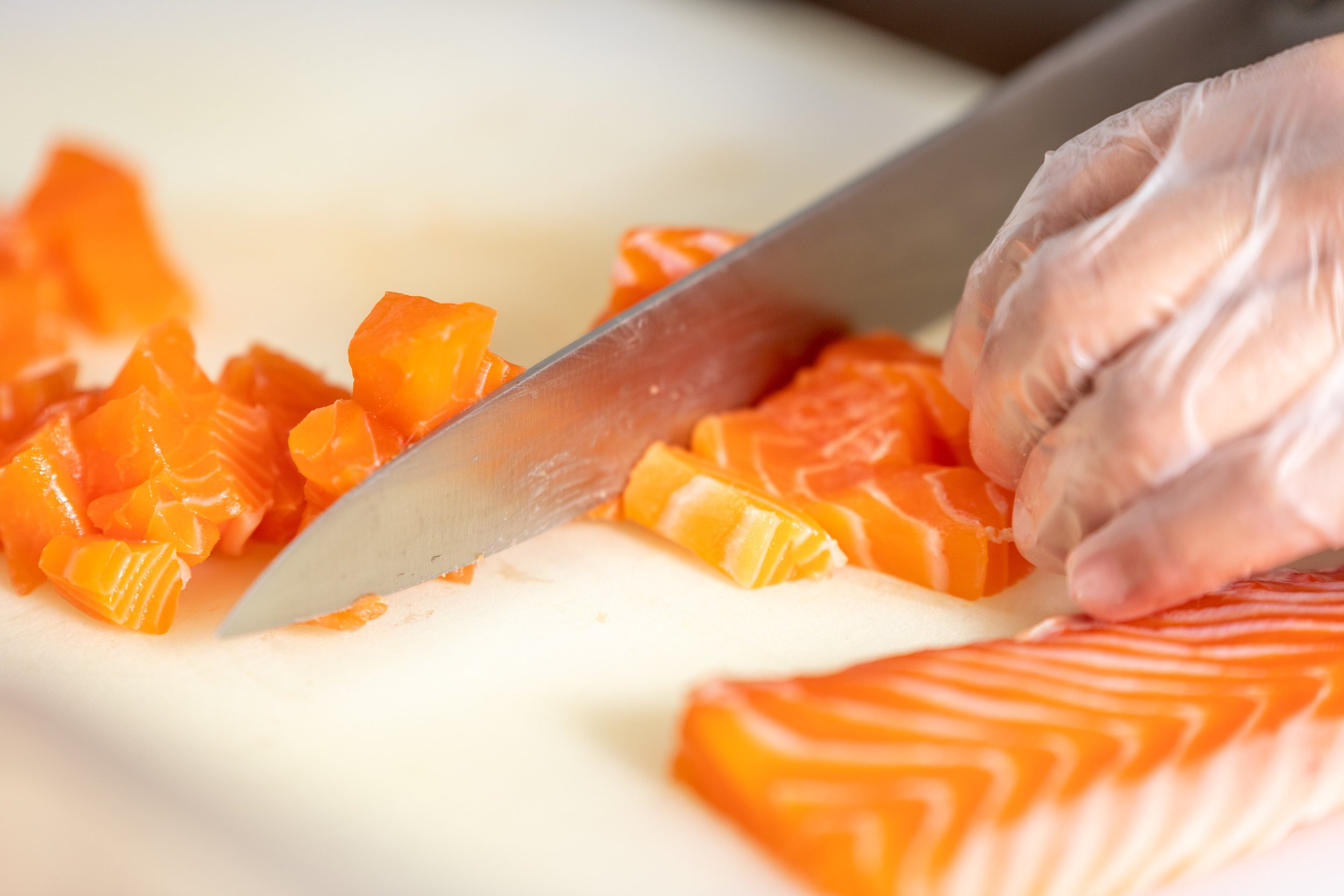
Our salmon comes from the Faroe Islands, a North Atlantic region known for cold, clean waters and well-regulated aquaculture practices. Our tuna sourcing includes Monterey Bay tuna fishing, tied to a region with a long-standing reputation for sustainable fishing practices and careful stock management.
These aren't arbitrary choices. They reflect a broader commitment we've built the brand around, one we go into in more depth in our post on sustainability at Poké House, and in how we talk about our efforts around marine conservation more broadly.
Where to Buy Poke Fish You Can Actually Trust
If you're wondering where to buy poke fish you can feel good about, the short answer is: look for a source that can answer specific questions. Where does the fish come from? How is it handled before it reaches the bowl? Is there a real relationship with the supplier, or just a label on a menu?
At Poké House, those answers are part of how we build every bowl. You can see the full range of proteins we work with on our menu, each one chosen with the same sourcing standards in mind.

Sourcing You Can Actually Verify
“Responsibly sourced” should mean something. At Poké House, it means knowing where our salmon and tuna come from, understanding how they're raised or caught, and holding our suppliers to standards that go beyond a label. That's what lets us serve fish that's safe to eat raw, sourced with the ocean's long-term health in mind.
Ready to taste the difference sourcing makes? Explore the Poké House menu and build a bowl with seafood you can trust.
